(HSV VIETNAM GROUP) – Mr. Duc sold fruit for 2 dong and earned 1 dong, billionaire Tran Ba Duong struggled.
Fruits including bananas, durian, and grapefruit are one of the key businesses of Hoang Anh Gia Lai Joint Stock Company (stock code: HAG). In addition, the group also has revenue from selling pigs, goods and services...
In the third quarter, fruit brought in net revenue of more than 880 billion VND, accounting for 61% of the structure. Accumulated for 9 months, this segment helped Mr. Duc's business collect nearly 2,884 billion VND, an increase of 27% over the same period last year.
Not only contributing greatly to the structure, the fruit segment also has a quite high gross profit margin, reaching about 52% in the third quarter and 46% in 9 months. That is, a business that earns 2 VND can earn 1 VND - a desirable number, even showing higher efficiency than specific industries such as real estate.
Another enterprise, Dak Lak Rubber Investment Joint Stock Company, grows durian and also brings good results. According to the third quarter financial report, durian revenue reached 17.7 billion VND, gross profit margin was nearly 70%. That is, if a business collects 10 VND, it earns 7 VND.
Previously, in the fourth quarter of 2023, Dak Lak Rubber also earned more than 2 billion VND from durian, recording a gross profit margin of about 85%.
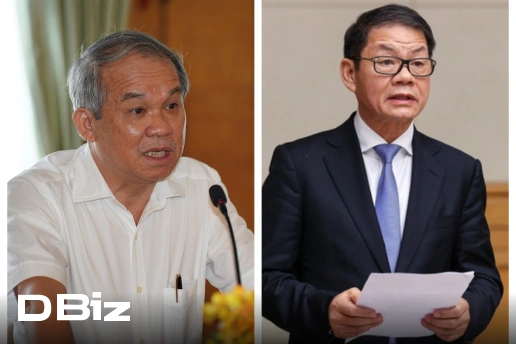
On the contrary, Hoang Anh Gia Lai International Agriculture Joint Stock Company (HAGL Agrico - stock code: HNG) lost money. The owner of Truong Hai Group (Thaco) Tran Ba Duong took over this business from Mr. Duc in 2021, but until now he still diligently erased accumulated losses and had many quarters of business losses.
In the third quarter, revenue from fruit sales reached nearly 50 billion VND, down 40% over the same period last year. The cost of selling fruit is higher than 76% of revenue, so this segment is at a loss. Accumulated for 9 months, the situation is similar.
Explaining, the company said that fruit tree output in the third quarter only reached 2,903 tons, down 56% over the same period. The main reason comes from the decrease in the area of banana gardens harvested during the period compared to the same period (from 1,920 hectares to 494 hectares). Due to the area of banana gardens grown for many years, the quality and productivity were no longer effective, so the company had to stop taking care of them to focus on re-grounding and renovating the gardens to improve quality and efficiency.
At the same time, the company is implementing the factory model, investing in synchronous completion of infrastructure, mechanized machinery and equipment, applying new technical processes to stabilize output, improve productivity and quality for efficiency in the coming time.
Fruit has not "saved" the overall picture
Revenue from durian has increased significantly and contributed to the success of Dak Lak Rubber Investment Company in the third quarter. Thanks to increased revenue from durian and high rubber prices, the business profited nearly 42 billion VND, nearly 4 times higher than the same period, also the highest profit in recent quarters.
To expand the planting area, the company's Board of Directors recently approved the policy of liquidating more than 36 hectares of cashew gardens of the subsidiary Dak Lak Rubber Company Limited in Laos (Daklaoruco) to grow durian in 2025.
The business wants to liquidate in the form of competitive bidding, the starting price for more than 36 hectares is about 123 million Lak (Lao Kip), equivalent to about 143 million VND. The starting price is determined based on the number of cashew trees inventoried on each lot or on the area of cashew trees that have been cut and restored. The remaining tree height is only 1m so it is calculated based on the selling price of firewood.
As for Hoang Anh Gia Lai, Mr. Duc once admitted that he "died" because of agriculture and "lived" also from agriculture. After standing up from the rubber price shock in 2016, Hoang Anh Gia Lai chose to grow short-term and grow short-term crops such as chili, banana, and passion fruit to have cash flow. Among them, banana trees have helped the group overcome difficulties.
As of September 30, the group had 7,000 hectares planted with bananas and nearly 2,000 hectares planted with durian - two key crops. The improvement in the fruit business helped Bau Duc's business become profitable in the third quarter and 9 months.
However, the company still faces a pressured debt situation. As of September 30, the business still had 4,126 billion VND of short-term financial loan debt and 3,097 billion VND of long-term financial loan debt. Total debt has decreased by 645 billion VND compared to the beginning of the year, however the pressure to repay short-term debt is still huge.
In the short-term debt section, Hoang Anh Gia Lai has 2,606 billion VND of short-term bank loans, 1,231 billion VND of domestic bonds due in 1 year and 330 billion VND of long-term bank loans due in 1 year.
Also according to the announcement, on September 30, the business delayed paying more than VND 4,501 billion in bond principal and interest to BIDV Bank, including more than VND 3,486 billion in interest and VND 1,015 billion in principal. Expected payment time is in the fourth quarter.
The reason for the delay in payment is that it has not collected enough money from the debt of Hoang Anh Gia Lai International Agricultural Joint Stock Company (currently agreed on a three-party debt repayment schedule) and has not liquidated some unprofitable assets.
Despite efforts, as of September 30, the company still had an accumulated loss of 626 billion VND. Once expressing his determination, Mr. Duc said he was diligently erasing accumulated losses and wanted to completely eliminate all losses this year. Fourth quarter business results will answer this goal of Mr. Duc.
As for HAGL Agrico, not only is the fruit segment losing money, the business is also having difficulty with the rubber segment. In the third quarter, billionaire Tran Ba Duong's company only recorded rubber revenue of nearly 90 billion VND but the cost price was higher, nearly 98 billion VND. The company said that the total area of completed rubber gardens is 15,192 hectares, however the area that can be effectively exploited is only 4,932 hectares, accounting for 32%.
According to the provisions of accounting standards, the company is accounting for depreciation expenses for the entire area of rubber gardens that have formed fixed assets, including gardens that are not harvested, resulting in revenue that does not fully cover costs.
Another reason why HAGL Agrico lost money was financial costs incurred of more than 116 billion VND during the period. Of which, the exchange rate difference loss due to reassessment of debts with foreign currency origin is more than 54 billion VND, interest costs arising from previous loan principal of rubber and oil palm projects are more than 62 billion VND.
Facing difficulties in business, HAGL Agrico continued to have accumulated losses of nearly 8,648 billion VND. Previously, the company had 3 consecutive years (2021-2022-2023) with losses, so according to regulations, the shares were forced to be delisted. As of September 30, the company's financial debt was at VND 9,681 billion, of which 85% was short-term debt.
To find a new direction, in the plan proposed at the beginning of the year, HAGL Agrico will invest in a fruit growing production project combined with large-scale cow farming in Attapeu and Sekong provinces (Laos), period 2024-2028. Project scale is 27,384 hectares and total investment capital is 18,090 billion VND.
It is expected that from 2028, this project is expected to bring in 13,500 billion VND in revenue and 2,450 billion VND in profit each year. The company will have fresh fruits for export including bananas, pineapples, mangoes, grapefruit, and durian; processed fruits for export; all kinds of breed cows and beef cattle. Whether this plan can bring HAGL Agrico to a "new page" or not, we need to wait for time.
Ha Diem HSV