(HSV VIETNAM GROUP) – With an investment of VND 10,000 billion to establish VinMetal metallurgical company, Vingroup not only helps VinFast proactively source strategic steel but also aims to increase the localization rate.
Vingroup spending 10,000 billion VND to establish VinMetal Production and Business Joint Stock Company is not simply expanding into the field of basic materials. This is a step in a long-term strategy to close the supply chain - from steel, batteries, components, to electric vehicle production - thereby increasing the localization rate, optimizing cost prices and reducing dependence on imports. In the context that Vietnam is aiming to develop the foundation materials industry and electric vehicle supply chain, this move can be seen as a strategic move.
For many years, Vingroup has gradually shaped a closed industrial ecosystem. Starting with electric vehicle production, the company expanded into batteries through VinES, then invested in charging station systems, GSM electric taxis and now metallurgy with VinMetal. The group's goal is to control key input factors in the production chain - a strategy similar to the way large industrial corporations such as Hyundai or Toyota have applied to reduce costs and increase proactiveness.
Around the world, the "vertically integrated" model has been proven to be a successful formula for many global automobile corporations. Typically, Hyundai Motor Group - the group that owns the subsidiary Hyundai Steel, specializes in producing tempered steel plates for automobile production. Thanks to material autonomy, Hyundai can reduce intermediate costs, ensure stable supply and maintain high competitiveness in the international market.
According to a report by McKinsey & Company (2023), material costs account for about 47–52% of the total cost of manufacturing an electric car, of which steel and alloys alone account for nearly 20%. Proactively sourcing high-quality automotive steel will help VinFast significantly cut production costs.
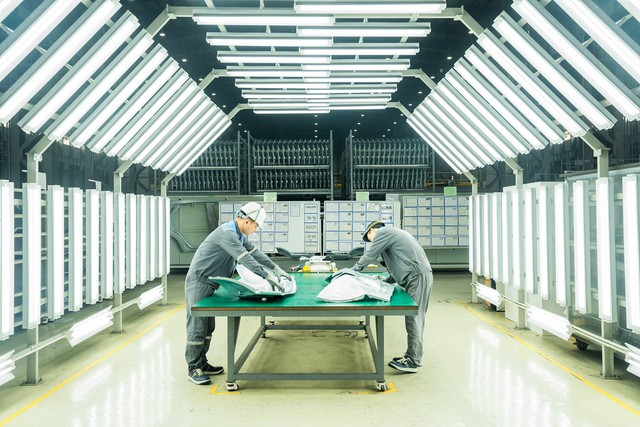
Furthermore, steel for the electric car industry is different from conventional construction steel. This type of steel has high strength, good impact resistance and corrosion resistance, requiring precise refining and cold rolling technology. Vietnam still has to import most of its auto steel from Japan, Korea or China. If this type of material can be produced, it will be an important step forward in the production capacity of the Vietnamese automobile industry.
The question is: does domestic steel production really help Vingroup reduce costs compared to importing? The answer depends on many factors - from factory size, input material sources, energy prices, to technological performance. According to OECD Steel Market Outlook 2024, average steel production costs in Asia range from 400–500 USD/ton for traditional blast furnace plants. Meanwhile, steel imported to Vietnam currently has an average price of about 600–740 USD/ton (General Department of Customs data).
If VinMetal applies modern metallurgical technology (such as EAF electric arc furnace) and takes advantage of renewable power sources in the VinGroup ecosystem, steel production costs can be reduced by 10–15% compared to imports, while ensuring environmental standards. In addition, reducing dependence on foreign supply chains helps stabilize supply, limiting risks due to transportation disruptions or geopolitical fluctuations - factors that caused steel prices to skyrocket in the 2021–2022 period.
Last June, VinFast said it wanted to localize hot stamping steel details. This is one of the key technological materials in modern automobile production, especially with the current increasing requirements for safety, lightening and fuel economy.
"We searched all over Vietnam but could not find a partner who could produce hot stamping steel that met the requirements. Even a famous enterprise like Formosa could not produce hot stamping steel that met the requirements," revealed Ms. Thai Thi Thanh Hai - Vice President of Vingroup and Deputy General Director of VinFast Global. This may be a difficult problem that VinMetal must solve when participating in the production of automotive standard steel.
However, if successful, VinMetal will not only bring benefits to VinFast. The formation of a domestic automotive steel manufacturer can create a strong spillover effect on the entire mechanical - materials - electronics industrial chain, which is the foundation of Vietnam's supporting industry.
In the framework of a discussion on the localization of electric cars, a VinFast representative said that the localization rate of electric car models has now reached more than 60%, including many important parts such as the body, engine, roof and shock absorbers.
The company is also gradually expanding domestic production of higher-value components such as seats, wiring systems, vehicle lights, rims, brake and steering systems, and interior and exterior details.
Vingroup's establishment of VinMetal is considered a long-term step to strengthen the domestic supply chain, not only serving VinFast but also aiming to increase the localization rate in the future. If VinMetal operates stably, Vietnam will have the fundamental material base to develop a sustainable electric car industry, reduce dependence on imports, while improving industrial autonomy and increasing domestic production value.
Ha Diem HSV