
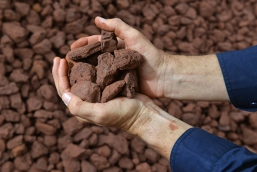
(HSV VIETNAM GROUP) - The increase in iron ore prices actually started in August. Analysts believe that the reason is because Chinese officials signaled that they will not impose a limit on steel output this year to promote the country's economic growth.
According to the Financial Times, iron ore prices have surpassed investors' expectations and increased nearly 40% since May, as China's steel output soared despite the weakness of the country's real estate sector.
Argus data shows that the price of iron ore, a key ingredient in steel production, has increased 38% in the past seven months to $133.95 per ton.
The increase in iron ore prices actually started in August. Analysts believe that the reason is because Chinese officials signaled that they will not impose a limit on steel output this year to promote the country's economic growth.
The steel industry has since accelerated, with output in the second half of this year expected to be the second highest on record, after the record set in 2020, according to Goldman Sachs.
As a result, steel prices decreased due to supply from China flooding into the market. However, iron ore prices still maintain upward momentum.
Iron ore demand remains strong in China. This is the world's largest iron ore consumer, with imports of 1.1 billion tons in 11 months of this year, mainly from Australia and Brazil, up 6% over the same period last year, despite a sharp decline in real estate construction demand due to developers facing difficulties.
A series of government-backed manufacturing and infrastructure projects have only partially offset the downturn in the real estate market.
However, steelmakers have been able to sell their excess supplies abroad and have been supported by the yuan's slide in value against the dollar so far this year. As a result, many producers increased output, supporting iron ore demand, although their profits were reduced.
Speculators bet that China's asset crisis will mean lower iron ore prices. However, the reality is completely opposite to initial expectations.
“In the second quarter, one of the most convincing trades at major US banks was shorting iron ore, but in reality, iron ore prices are not just related to the housing sector,” said Tor Svelland, chief executive officer of commodity-focused hedge fund Svelland Capital.
“We never thought the government would allow steel exports to skyrocket, but they did,” said Tom Price, an analyst at Liberum.
Analysts at Morgan Stanley said in May they expected prices to reach $90/ton by the fourth quarter. Ewa Manthey, commodity strategist at ING, now predicts prices will average around $120/ton in 2024 if Beijing introduces further stimulus measures to support the economy.
Meanwhile, dry cargo ship rates have increased as Brazilian iron ore miners compete with thermal coal traders for space. Meanwhile, the number of ships is limited. This year, Brazilian iron ore miners benefited from dry weather affected by El Niño.
The Baltic Dry Index (BDI), which tracks freight rates for large, non-containerized ships, rose to its highest level since May 2022 in the first week of December.
Owners of Capesize cargo ships (200,000 tonnage often carrying iron ore and coal) charged 54,000 USD/day on December 4, a sharp increase from 17,000 USD/day a month ago.
Ha Diem HSV