
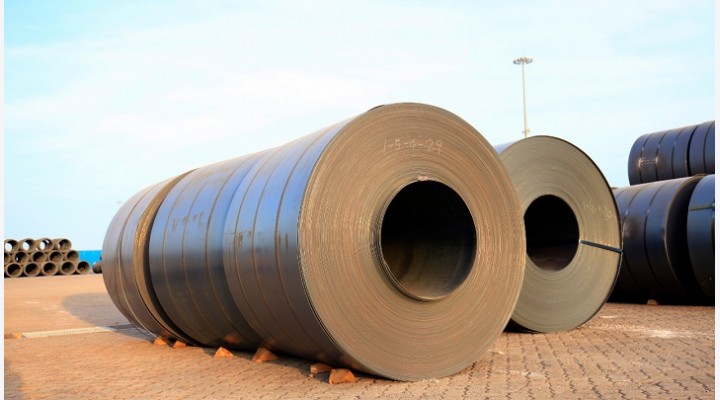
(HSV VIETNAM GROUP) – Crude steel monthly metal index (MMI) increased 2.53% from September to October. About six weeks ago, steel prices in the US bottomed out at the end of September. However, in October, the market turned around, leading to HRC prices increasing nearly 17% as they returned to August ranges. CRC and HRC steel prices both followed HRC price increases, increasing in turn. 13% and 12%. Steel plates are the only exception as prices continue to decline with a decrease of nearly 3% compared to the previous month.
U.S. steelmakers have tried to reverse price trends over the past month, even as the auto sector struggled with UAW strikes that have since been resolved. Maintenance-related outages caused domestic crude steel capacity utilization to fall to 73.8% in the third week of October, the lowest level since January. Although there has since been a modest recovery, capacity utilization fell back to 73.9% in the first week of November.
Tighter supplies also caused factory delivery times to trend longer throughout the month. Production times at the HRC plant continued to increase from June, when they shortened to a near all-time low of three weeks.
By the end of October, delivery times had nearly tripled compared to June figures. In fact, they recently hit their longest average since April, their last major uptrend. Although some service centers still reported availability in December, average factory delivery times extended to 2024.
Factory production time and domestic steel capacity utilization rate have a negative correlation. Historically, when steelmakers reduce capacity, tighter supply leads to longer steel production lead times.
Lower production levels and longer lead times appear sufficient for steelmakers to warrant price increases. After Cleveland-Cliffs initiated a new price increase for flat-rolled steel in late September, Nucor, ArcelorMittal Dofasco, Stelco and U.S. Steel responded accordingly. Meanwhile, Cliffs also launched the next two price increases, by the end of October, bringing Cliffs' minimum HRC steel price to 900 USD/ton, the highest in the domestic market.
As the saying goes, “the trend is your friend” and given the most recent uptrends, steel prices could rise further before peaking. The three most recent major uptrends, which started in August 2020, March 2022, and December 2022, lasted for 61 weeks, 7 weeks, and 21 weeks, respectively. This equates to an average of 30 weeks. Ahead of the massive 2020 uptrend, price action looks more dynamic. Weekly gains last an average of 4.3 weeks.
While the length of the historic post-pandemic uptrend remains atypical of historical steel price action, market consolidation in recent years appears to have given steelmakers greater leverage to maintain rising steel prices than in previous years. Clearly, not every price increase introduced by steelmakers results in an overall price increase. However, the three most recent uptrends suggest that when both the price and the 15-day moving average break short-term resistance levels with enough strength, a sustained uptrend is likely to form.
Despite tighter supply and strong bullish technical signals, risks remain bearish. This could hinder efforts by steelmakers to keep prices higher for longer. Furthermore, the manufacturing sector contracted further in October, marking 12 consecutive months of decline. Both employment and new orders fell, suggesting that no change in consumer demand will support steel demand and prices.
This suggests that the fate of the current uptrend will likely depend on market discipline among steelmakers. Capacity utilization began to recover at the end of October. While it hasn't done so yet, factory lead times will likely start to decline if that rate continues to increase. In the context of a challenging economic environment, this could translate into an intention to limit production levels altogether, if factories want to keep a tight market balance.
Meanwhile, overall employment also showed signs of weakness during the month, which could put further pressure on consumer demand. Although still at a historic low, the unemployment rate rose to 3.9%, the highest level since January 2022. According to data from the Bureau of Labor, among 19 major sectors, durable goods manufacturing ranked eighth for the highest rate of layoffs during the month.
Professional and business services, accommodation and food services, and the construction sector saw the most layoffs. Interestingly, the construction and services sectors have long proved resilient, appearing to offset weakness in the manufacturing sector and help support consumer demand. These sectors helped the US achieve 4.9% GDP growth in the third quarter. Meanwhile, the construction industry in particular also brought steady demand for metals, including steel, throughout the year.
If the latest jobs data means that once resilient sectors have peaked, consumer demand could fall further amid higher unemployment. This will bring new challenges for steelmakers looking to maintain the upward trend, especially as the market enters a historically slow year-end season.
Diem Ha HSV