
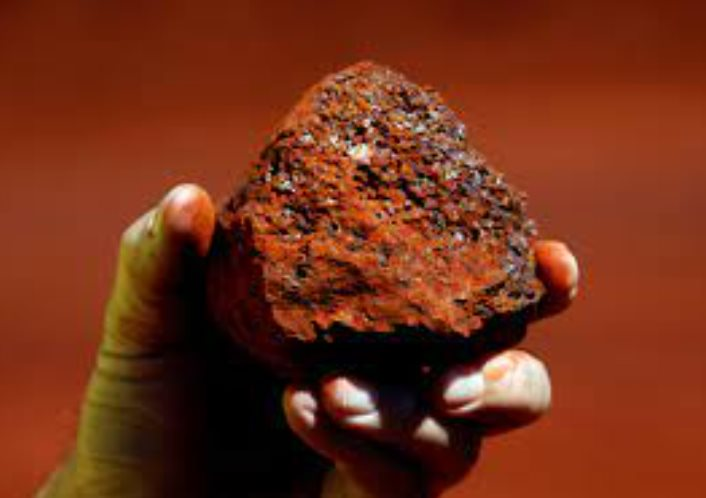
(HSV VIETNAM GROUP) – Rising iron ore prices make it one of the best performing commodities in 2023, and investors still have grounds to be optimistic about the outlook for 2024 as China is still attracting global attention.
Iron ore prices have increased sharply in 2023, averaging over $100/ton over the 12 months. The average price for a ton of 62% iron ore ended December 2023 at 140.5 USD/ton, marking an increase of 19.73% compared to December 2022, when the price was 117.35 USD/ton.
Price movements in 2023 are not uniform: averaging over 120 USD/ton in the first 3 months of the year, but falling to 105.13 USD/ton in May 2023 and remaining relatively stable in the following months. From September 2023, the average price returns to above 120 USD/ton, eventually surpassing 130 USD in the last two months of 2023. The average price in December 2023 is 136.37 USD/ton, up 4.6% compared to 130.36 USD/ton in November 2023.
Itaú BBA analyst Daniel Sasson describes 2023 as a “curious” year for iron ore. “Even though the average annual price is $120/ton, the commodity remains at the same level as in 2022,” he wrote, and “While the average price remains the same, the road is not smooth.” At the beginning of the year, there were strong expectations of a demand recovery and price increase as China relaxed its Zero-COVID policy. That explains the price action in the first quarter of 2023. However, the reopening of the world's largest iron ore consumer has had more impact on the recovery in consumption than industrial activity.
Price evolution chart of 62% iron ore.
However, China's iron imports in 2023 increased compared to the previous year. The Baltic Dry index, which represents freight rates for bulk carriers, rose 49% in 2023. Bulk carriers mainly carry iron ore. China accounts for 70% of the world's iron ore transported by sea. The results benefit global iron ore producers, especially Australia's Fortescue and Brazil's Vale. The stock prices of these companies have increased about 30% in the past three months.
While China's real estate sector has not escaped the difficult period, steel prices have had a small recovery since mid-October 2023. Beijing's plan to stimulate the economy with another round of heavy infrastructure spending has left some manufacturers hoping for a surge in steel demand.
However, under the pressure of rising iron ore prices, China's steel output is starting to decline. In October 2023, steel production fell below 900 million tons, lower than the same period of the previous five years. Part of the reason is also because construction activities related to domestic real estate, which accounts for 35% to 40% of China's steel demand, are slowing down.
Meanwhile, China's steel exports increase 45% by 2023, mainly to Southeast Asia and Europe. This may explain China's increased demand for iron ore imports. The appreciation of the Yuan in the last months of the year also made iron purchases cheaper - even when inventories at Chinese ports were low.
In 2023, the volume of Chinese steel sold abroad is estimated to reach 100 million tons, equivalent to 3 times Brazil's annual output.
China is expected to achieve GDP growth of more than 5% in 2023, thanks to consumption. In 2023, the infrastructure, automobile and machinery sectors boosted China's steel consumption, with steel output expected to increase 2% in China in 2024.
Therefore, iron ore demand is expected to continue to be maintained by the above-mentioned sectors. "Many believe that the worst may be over for the Chinese real estate sector, so the pace of the slowdown will slow, which could help maintain ore demand. However, there are still some concerns about the global economy," warned Itaú BBA analyst Daniel Sasson.
At the recent World Economic Forum in Tianjin, Chinese Premier Li Keqiang said that China will deploy more practical and effective measures to expand domestic demand and stimulate market vitality. Recently, the Central Bank of China also cut policy interest rates to support the economy, investors expect many more steps to follow. At the same time, the Central Bank also lent 350 billion yuan to policy banks through the supplementary lending mechanism (PSL) committed in December. This is expected to support ore and steel demand.
On the supply side, Daniel Sasson noted that four key suppliers – Vale, BHP, Rio Tinto and Fortescue – have published 2024 production estimates that are largely unchanged from 2023. “In a scenario where supply is limited and demand remains reasonable, prices could be above $100 per ton in 2024,” Daniel Sasson said. Itaú BBA company predicts the average price in 2024 will be 110 USD/ton.
Ha Diem HSV