HSV VIETNAM GROUP) – Transparency in information and quality is one of the top requirements when exporting agricultural products and food to the EU market. For detailed regulations and requirements for each product, exporters should refer to the official competent authorities.
Information transparency and quality are top requirements
Sharing at the Conference to disseminate regulations and commitments on food safety and animal and plant quarantine in the Vietnam - EU Free Trade Agreement (EVFTA) organized by the Vietnam SPS Office (Ministry of Agriculture and Rural Development) in coordination with the Department of Agriculture and Rural Development of Phu Yen province on June 14 in Phu Yen, Deputy Director of Vietnam SPS Office Ngo Xuan Nam said that up to now, Vietnam has been participating in 19 bilateral trade agreements and multilateral.
Of these, 16 agreements have been officially signed and 3 agreements are under negotiation. There are many agreements that are considered new generation free trade agreements with many mandatory commitments. Many regulations on food safety and animal and plant disease safety (SPS) Vietnam must comply with to meet the requirements of importing countries.
Every month, the Vietnam SPS Office receives about 100 notices and drafts on changes to SPS measures, including drafts on changes in pesticide residue levels, veterinary drugs, quarantine subjects, regulations on materials in contact with products...
Emphasizing that updating and disseminating SPS regulations to management agencies, businesses, cooperatives and farmer households is especially important, the leader of the Vietnam SPS Office stated the reason: "SPS regulations are mandatory regulations. If we violate them, we will be warned by import partners. This will cause impact and damage to businesses, especially affecting the entire industry and brand of Vietnamese agricultural products in the international arena."
According to Mr. Luong Ngoc Quang, specialist of the Department of International Cooperation and Communications (Department of Plant Protection, Ministry of Agriculture and Rural Development), transparency in information and quality is one of the top requirements when exporting agricultural products and food to the EU market.
For the EU market, all shipments must meet the requirements that the product must not be on the list of plants, plant products banned or temporarily suspended from import into EU countries; not infected with EU plant quarantine objects and almost not infected with other pests; Wooden packaging materials must meet international standards for wooden packaging materials (ISPM-15)...
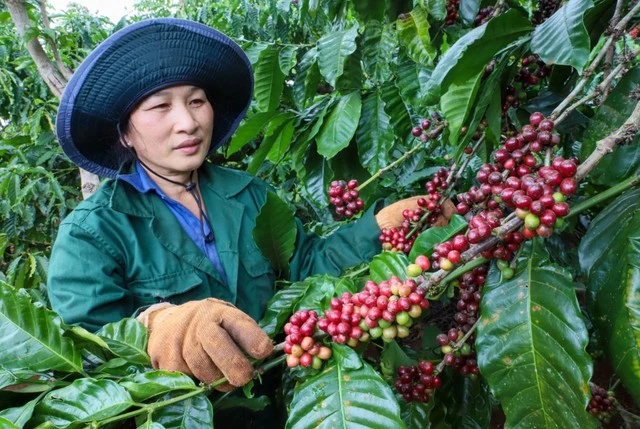
"The EU is especially concerned about fruit flies on fruit and vegetable products, so we must negotiate a treatment plan. In addition, for fresh fruit products, cashew nuts, coffee... when exported to the EU, the EU requires that the goods must meet the same standards and be equivalent to the standards currently applied in the EU," Mr. Quang said.
Recognizing that the EU is one of the key export markets for Vietnamese agricultural products, with many strict and scientific technical requirements, Mr. Nam emphasized: "Good compliance with the requirements of the EU market will be an opportunity to bring Vietnamese agricultural products into many potential markets around the world."
From a recommendation perspective for businesses, according to Mr. Nam, for products of plant origin, it is necessary to further strengthen compliance with EU regulations, especially the control of pesticide residues when many EU maximum allowable residue levels (MRLs) are at very low levels.
Businesses must closely follow and understand market requirements
Recently, the European Commission (EC) announced that Vietnamese instant noodle products would be removed from the border inspection list when imported into the EU.
Sharing a perspective from a business, Mr. Pham Trung Thanh, Head of External Relations Department of Acecook Vietnam Joint Stock Company, said that the EU's removal of control over Vietnamese instant noodle products is very good information for Vietnamese instant noodle manufacturing and exporting businesses as well as other exporting businesses to the EU market.
This affirms the confidence of EU importers in Vietnamese agricultural and food products.
According to Mr. Ngo Xuan Nam, the lesson learned here is the effective and synchronous coordination between state management agencies and businesses in meeting regulations and standards of the EU market.
From Acecook's experience, Mr. Thanh shared: "To meet EU import standards, businesses must closely follow market requirements. When participating in EVFTA, tariff barriers are almost gone but they have to face technical barriers.
Therefore, businesses must understand it correctly and clearly. Notably, to meet the requirements, businesses need the companionship and coordination of state management agencies. In the EU market, even a small mistake by a business can cause the industry to face many difficulties."
Mr. Nam added that currently, the EU divides imported agricultural and food products into two categories, low risk and high risk. Among them, low-risk products, based on your assessment, will not require systematic border control. Conversely, high-risk products will require more control measures.
"For detailed regulations for each product, exporters should officially consult competent agencies or the Vietnam SPS Office for guidance," Mr. Nam emphasized.
Ha Diem HSV