
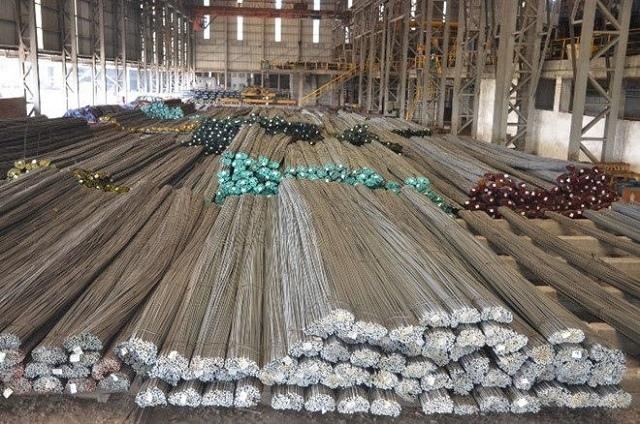
(Hanoi Iron and Steel – HSV) Looking at the stock market in 2023, the KBSV Securities report believes that there will be a factor shaping the market trend.
After 2 years of strong growth, Vietnam's stock market will decline deeply in 2022 under the impact of negative factors at home and abroad. Regarding peripheral factors, Russia-Ukraine tensions; Chinese Government's zero-Covid policy; Central banks accelerated the process of tightening monetary policy to cope with hyperinflation; Economic recession risks in the US and EU... are the main risk factors.
Meanwhile, domestic factors such as risks from the corporate bond market with events such as Tan Hoang Minh and Van Thinh Phat; the process of purifying violations on the stock market; Exchange rate pressure and inflation lead to tight liquidity and high interest rates; Slow disbursement of public investment... also has a strong impact on the stock market.
Looking at the stock market in 2023, the KBSV Securities report believes that there will be a number of key factors shaping the market trend such as China's full opening, the Fed's monetary policy and the risk of a US economic recession, and risks from the corporate bond market.
Besides the above factors, KBSV emphasized that the growth rate of M2 money supply greatly affects the stock market. M2 money supply is a factor that has a strong impact on market developments, because periods of strong M2 increases, accompanied by low interest rates, often create favorable conditions for cash flow into the stock market, helping VN-Index increase and vice versa.
Giving specific evidence, in the periods 2006 - 2007, 2009, 2016 - 2017, 2020 - 2021, Vietnam's stock market has a strong growth trend accompanied by high M2 money supply (greater than 14%) thanks to a combination of many factors such as SBV's expansionary monetary policy and the economy's high capital absorption ability.
This includes both the Government's public investment expenditure and loans to expand production and business from domestic enterprises, while foreign capital flowing in is also abundant.
On the contrary, the market in the periods of 2011, 2018, and 2022 Vietnam's stock market has a tendency to adjust with low M2 growth (lower than 12.5%) due to adverse internal and external factors.
In fact, M2 money supply growth reaching a record low, estimated at 6% -7% in 2022, is one of the important reasons why Vietnam's stock market plummeted.
The decline in money supply comes from two reasons: SBV's monetary policy, when the exchange rate and foreign currency market are under pressure due to the balance of foreign currency supply and demand and unfavorable developments in the international market (the Fed raised interest rates 5 times to restrain the rise of inflation, and the DXY Index increased sharply since the beginning of the year) which has put pressure on the domestic market, forcing SBV to sell foreign currency when necessary to stabilize the market.
In addition, the government's public investment disbursement expenditure is at a low level, the state treasury's money stored at SBV and the banking system is estimated at more than 900 trillion VND that has not been pushed into circulation (specifically, about 600 trillion VND in SBV and 300 trillion VND in the banking system).
Forecasting for 2023, KBSV believes that money supply growth will be negatively affected. It is expected that money supply growth in 2023 will recover based on the low base of 2022 due to some favorable objective conditions such as the State Bank's ability to buy USD, increased foreign exchange reserves improving money supply growth or promoted public investment.
However, money supply growth is still likely to be negatively impacted when businesses' demand for new loans is forecast to decline due to high interest rates, China's opening up, putting pressure on prices of many goods and risks related to corporate bond maturity.
With the above basis, KBSV forecasts that credit growth in 2023 will reach 13-14% over the same period, with a high increase in mobilization of 12%, helping money supply increase again by 13% - partly due to the low base of 2022. Therefore, system liquidity will also be less stressed, creating conditions for interest rates to cool down compared to the end of the fourth quarter of 2022, although still remaining at a high level.
With the high correlation of M2 and VN-Index P/E as analyzed above, M2's return to growth is an important driving force to help the market P/E return to balance and move towards the neutral mark, corresponding to the reasonable point range of the VN-Index at the end of 2023 at 1,240 points.