
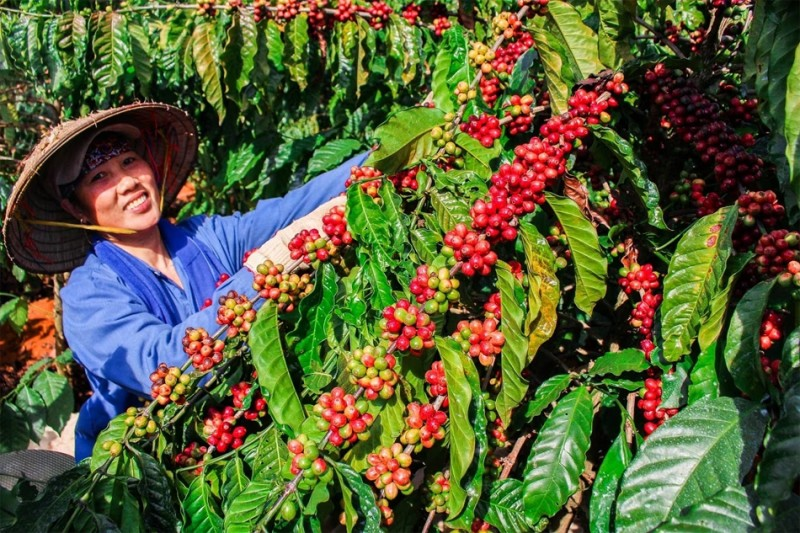
(HSV VIETNAM GROUP) – Ending the trading day on January 30, Arabica coffee prices recovered 2.51%; Robusta coffee prices increased by 1.86%, creating a new peak in 30 years.
According to the Vietnam Commodity Exchange (MXV), at the end of the trading day on January 30, Arabica coffee prices recovered 2.51%; Robusta price increased by 1.86%, creating a new 30-year peak. Inventories at the ICE Department continue to decrease sharply, raising concerns about supply shortages more seriously.
Robusta inventory on the ICE-EU Department as of January 29 decreased by 910 tons, to 28,860 tons, one of the lowest coffee storage amounts ever recorded.
Arabica coffee prices recovered 2.51%; Robusta price increased by 1.86%, creating a new 30-year peak
Besides, in the closing report on January 29, the total amount of certified Arabica at the ICE-US Department decreased by 5,741 bags, to 243,465 bags. Coffee grading activities continue to stagnate while consumer demand continues, causing standard inventory to decrease sharply even though the number of coffee waiting for grading has increased to 81,998 bags.
In addition, in January, the Dollar Index weakened, US consumer confidence increased and the number of new jobs was higher than expected. These factors pulled the USD/BRL exchange rate down in the second half of the evening session. Narrow exchange rate differences limit the sales demand of Brazilian farmers, thereby pushing up coffee prices.
On the domestic market, recorded this morning (January 31), the price of green coffee in the Central Highlands and Southern provinces continued to increase by 1,000 VND/kg. Accordingly, domestic coffee is currently purchased at around 78,000 - 79,000 VND/kg.
According to experts, Vietnam has an advantage in Robusta coffee. The price of this type has increased for several consecutive sessions due to concerns about supply from Asia and the blockage of the Europe-Asia shipping route through the Suez Canal.
In addition, our country's coffee output this year is expected to decrease by 20-40% compared to the same period last year, but still make a big profit because of high purchasing prices. In the 2023-2024 crop year, our country's coffee output is expected to decrease to 1.6-1.7 million tons, Vicofa informed, lower than 1.78 million tons in the previous crop year.
In Vietnam, the Coffee and Cocoa Association estimates that coffee output in the 2023/2024 crop year (from October 2023 to September 2024) will decrease by 10% compared to the previous crop year, down to 1.6 million tons. This is due to the impact of climate change, increased intercropping area, and farmers investing in crops with high economic efficiency such as durian and fruit trees.
Our country's coffee output this year is expected to decrease by 20-40% compared to the same period last year
Along with reduced output, old crop inventory transferred to new crop is also at the lowest level over the years. If in the 2022-2023 crop year, the amount of inventory transferred from the previous crop was about 160 thousand tons, this year this number is less than half, about 58 thousand tons.
The above data shows that the domestic and world coffee markets will continue to fluctuate. Experts predict that coffee prices in the 2023-2024 crop year will continue to remain high, because this is when roasters around the world buy inventory and demand will increase, so coffee prices have little chance of going down.
The Ministry of Agriculture and Rural Development's orientation for coffee is an export target of 6 billion USD by 2030, at the same time, increasing the added value of Vietnamese coffee products.
To do this, the coffee industry needs to be given synchronous attention with a comprehensive solution, including boosting the output and quality of raw coffee areas, and at the same time, increasing the rate of deep processing.
In fact, many coffee growing regions in Vietnam are proactively replanting, bringing quality coffee varieties with good yields into processing. The Ministry of Agriculture and Rural Development is working with localities with large coffee growing areas to conduct surveys and regional planning associated with identification of growing areas, ensuring export standards from the planting process.
It is expected that from now until 2025, the whole country will replant 75,000 hectares and transplant and renovate 32,000 hectares of coffee, of which Arabica coffee accounts for about 20% of the total area. In addition, most of the replanted coffee area is planted with new varieties with high yield and outstanding quality.
Ha Diem HSV