
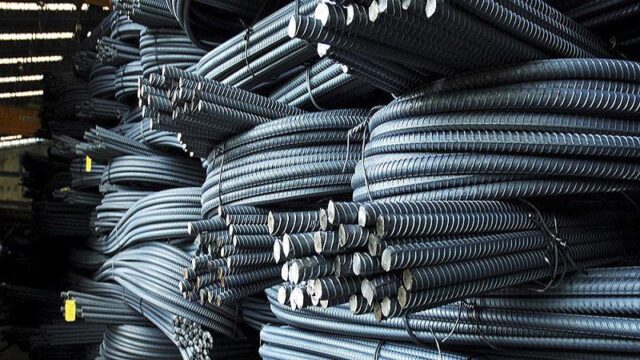
Hanoi Iron and Steel (HSV) – The unusual flow of cheap Russian products is roiling steel markets in Asia, putting downward pressure on prices and prompting a key producer in the region to warn it will consider trade countermeasures.
Russia is massively exporting steel to the east after US and European sanctions have blocked major markets in the West. Meanwhile, the war in Ukraine disrupted Russian steel exports through the Black Sea region, according to Asian steelmakers.
The volume of Russian steel exports to Asia is increasing. This could put pressure on steel markets in the region, which are already hurting amid falling Chinese demand.
On July 18, Taiwan's CSC Steel Group said it was collecting evidence to be ready to take steps "to combat unfair trade practices" by Russia. According to Tokyo Steel (Japan), when China's import demand recovers, the country may switch to buying cheap Russian steel instead of importing products from Asia.
The shift in Russia's steel trade flows just as many of the country's commodities from coal to crude oil are looking to other markets to find new buyers in the face of sanctions or boycotts from Western governments and businesses.
Most of Russia's surplus steel resources, especially semi-processed products, also known as steel billets, have flowed to Türkiye. Russian steel mills are also now pushing to sell steel products at lower prices in China and elsewhere in Asia.
On July 17, India Times newspaper quoted sources saying that after coal and crude oil, Russian steel is "landing" on Indian shores, causing worry for domestic steel manufacturers because Russia's rivals are selling off increasing inventories.
Sources said that two or three Russian steel shipments have arrived at Indian ports. Russian standard hot-rolled coil (HRC) steel is being offered at a discount of about 3,000 rupees ($38) per ton compared to domestic prices. According to data from SteelMint, since June, Indian customers have ordered about 150,000 tons of Russian HRC, nearly three times more than India's total steel imports from Russia in 2021, about 56,000 tons.
This comes at a time when Indian steelmakers are facing difficulties in the export market due to the new 15% export tax imposed since May. India's steel exports have declined since then, and domestic demand has also gone down, making Indian steelmakers concerned about increasing competition in the domestic market.
"Russian steel is a worrying problem because Russian manufacturers are selling it at extremely cheap prices," said a leader of a leading steel company in India on condition of anonymity.
However, for Tokyo Steel, a producer of alloys from scrap iron and steel, the appearance of cheap Russian products is a favorable factor because it brings a discount to scrap iron and steel prices in the region.
Billet producers across Southeast Asia, which have been major suppliers to China in recent years, are cutting production. That means they are buying less scrap iron and steel, including from Japan, making local supplies more abundant for Tokyo Steel.
Russian steel products are “a completely new factor that has never existed before” in the scrap iron and steel market,” Tokyo Steel Chief Executive Soichiro Tsuda said last week in an interview.
Japan's scrap iron and steel prices have dropped more than 25% from the high in April, but Tsuda assessed: "Scrap iron and steel prices may decrease further, or maintain at the current level."
In Taiwan, Taiwan's CSC Steel Group, which has a capacity scale comparable to that of the U.S. Steel Corp., America's second largest steel producer, said it is monitoring the flow of Russian hot-rolled steel products amid reports that the country's manufacturers are reducing prices.
"Russian steel mills are eager to move to the Asian market to sell at much lower prices than the international market to eliminate excess steel. Rumors about the sale of cheap steel products on a large scale in Russia are boiling, seriously disturbing the order of the domestic steel market," according to CSC.
At the end of March, in a report sent to Deputy Prime Minister Andrey Belousov, the Russian Manufacturers Association warned that domestic steel demand could decrease by 30%, equivalent to 13 million tons in 2012, mainly due to shutdowns in the auto industry.
Eight out of 14 auto assembly plants in Russia, including plants of foreign automakers, have suspended operations indefinitely after Western sanctions banned or complicated the export of some important auto components to Russia.
Source: Saigon Economy
Link: https://www.satthep.net/thi-truong-thep-chau-a-chiu-suc-ep-vi-thep-gia-re-cua-nga.html