(HSV VIETNAM GROUP) - In the first 10 months of this year, Vietnam's agricultural exports to key markets decreased over the same period (Americas decreased 20.6%, Europe decreased 11.8%), surprisingly, the African market increased by 21.6%; Asia increased by 5.7%.
Agricultural product exports to the Middle East and Africa increased rapidly
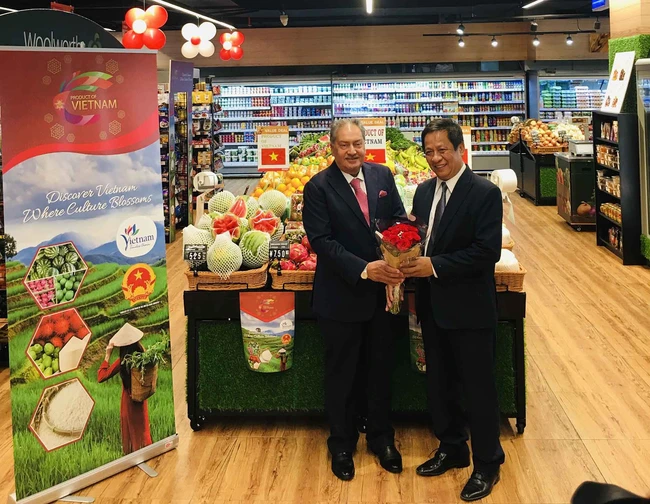
In October, the Vietnamese Embassy in the UAE coordinated with the Al Maya supermarket system in Dubai to organize the Vietnam Agricultural Products Export Week 2023.
In the first 10 months of this year, Vietnam's agricultural product exports to key markets were all compared to the same period (Americas decreased by 20.6%, Europe decreased by 11.8%), surprisingly, the African market increased by 21.6%; Asia increased by 5.7%. In particular, the Middle East and Africa are two large market areas that are in need of importing large quantities of Vietnamese agricultural products.
According to information from the Department of Quality, Processing and Market Development (Ministry of Agriculture and Rural Development), to date, Vietnamese agricultural, forestry and fishery products have been present in over 190 countries and territories; Agricultural, forestry and fishery export turnover in the first 10 months of 2023 reached 43.08 billion USD, of which the largest market share is Asia (49.1%), America (22.6%), Europe (10.5%); Two regions with relatively small market shares are Africa (2.1%) and Oceania (1.5%).
However, in recent years, our country's agricultural exports to the Middle East and Africa region have continuously increased, especially food products. In 2022, the total export value of agricultural, forestry and fishery products into these two areas will reach over 1.6 billion USD (up 2.6% over the same period in 2021) and in the first 10 months of 2023 has reached nearly 1.6 billion USD (up 11.7%).
More information about this market area, Mr. Nguyen Phuc Nam, Deputy Director of the Asia - Africa Market Department (Ministry of Industry and Trade) said: In trade exchanges between Vietnam and the Middle East - Africa region, agricultural and aquatic products are always in the group of important export products, with good growth turnover, contributing to promoting bilateral trade turnover.
Specifically, Africa has high demand for rice, coffee, pepper, coconut meat, processed agricultural products, canned foods, seafood... While for the Middle East, potential agricultural products include: Rice, coffee, cashew nuts, pepper, fresh fruits (dragon fruit, passion fruit, lychee, seedless lemon...), seafood...
The Vietnam Trade Office in Iran said that in the structure of imported goods, Iran imports agricultural products worth about 10 billion USD/year. Iranians value Vietnam and are quite fond of Vietnamese goods. Vietnamese agricultural products such as tea, coffee, pepper, cashew, and fruits all have potential for export to Iran. Vietnamese goods have many opportunities to promote exports to Iran thanks to a complementary, non-competitive structure. The opportunity to promote the export of goods to Iran, especially agricultural products, also lies in the fact that Iran's import demand is large because this country often suffers from droughts and crop failures.
However, trade relations between Vietnam and Iran are still very limited, the total import and export value of goods between the two countries has so far only reached about 100 million USD/year. This is a very modest number compared to the potential of the Iranian market as well as the political, diplomatic and economic cooperation relationship between the two countries.
In Iran, on average each person consumes about 120kg of fruit/year, of which people are very fond of pineapple and mango. If they do well in the market, Vietnamese businesses can also export other fruits such as dragon fruit, passion fruit, guava, papaya, mangosteen, grapefruit... In addition, prominent habits in Iranian consumer culture show that the potential for exporting tea and coffee to this market is huge. Currently, Iran mainly imports raw coffee, black tea, and green tea. Meanwhile, this is Vietnam's strong product and can boost exports to this country.
Exporting agricultural products to the Middle East needs to pay attention to the important "keyword": Halal Certificate
Head of the Vietnam Trade Office in the UAE (United Arab Emirates), Mr. Truong Xuan Trung, said that the UAE is a rich country and its population has been increasing over the past two decades, so they have more demand for consuming agricultural products. 80% of food and beverages are imported by the UAE.
In addition, the UAE is an open market, with almost no trade barriers, but this is a very fiercely competitive market. Products that want to be exported here must ensure food hygiene and safety; Chemical and pesticide residues must not exceed permissible levels. In addition, agricultural products exported to the UAE must have a Halal certificate (prohibited substances according to the provisions of Islamic law), medical inspection certificate...
Mr. Trung also emphasized that businesses need to negotiate and apply the safest payment terms when dealing with UAE businesses.
Meanwhile, Mr. Tran Trong Kim, Vietnam Commercial Counselor in Saudi Arabia, said that the country has great demand for agricultural products, food, Halal, organic food, fresh vegetables and fruits. Imports from Vietnam reach 200 million USD/year, of which agricultural and aquatic products reach over 80 million USD. The country also has strict regulations when goods must be registered with the Saudi Arabian Food and Drug Authority and must be accepted by this agency.
In addition, this agency also enforces very strict inspections and checks, they have the right to officially inspect the operating procedures of competent authorities in the exporting country to verify that the legal regulations and management system in that country comply with Saudi Arabia's food laws...
According to Mr. Ngo Xuan Nam, Deputy Director of the Vietnam SPS Office (Notification Office and National Inquiry Point on Sanitary Epidemiology and Animal and Plant Quarantine), regulations on food safety measures and animal and plant disease safety in each country in the Middle East and Africa region are different, however, agricultural and food products entering these markets need to pay attention to a very important "keyword" related to religion, which is Halal certification.
These are also two special areas for the Vietnamese agricultural market. In 2023, the Vietnam - Israel Trade Agreement (VIFTA) will be signed. In addition, the Free Trade Agreement with the United Arab Emirates (UAE) is also under discussion. These are the first Free Trade Agreements to help open the gateway for Vietnamese goods to reach deep into the Middle East market.
Although these two markets are opening up many opportunities, Mr. Nam also cautioned businesses to be careful when trading goods because of differences in language, culture, legal systems, business practices as well as the phenomenon of fraud. Because Vietnam's trade network in this area is still thin and logistics services are limited, Vietnamese businesses often export through international intermediaries. This causes the price of Vietnam's agricultural and aquatic product exports to increase, reducing competitiveness...
Regarding the African market, currently 45/55 African countries have joined the WTO, therefore, these countries have gradually removed non-tariff barriers, reduced import taxes, creating favorable conditions for Vietnamese goods to enter the market. Vietnam-Africa trade has increased from 2.52 billion USD in 2010 to 5.5 billion USD in 2022. Of which, Vietnam's exports to Africa reach 2.8 billion USD. Products such as rice, coffee, and seafood are Vietnam's strong export products.
Ha Diem HSV
Vietnam's agricultural product exports skyrocket in the Middle East and Africa markets, what "keywords" should we pay attention to?
In the first 10 months of this year, Vietnam's agricultural exports to key markets decreased over the same period (Americas decreased 20.6%, Europe decreased 11.8%), surprisingly, the African market increased by 21.6%; Asia increased by 5.7%.
Agricultural product exports to the Middle East and Africa increased rapidly
In the first 10 months of this year, Vietnam's agricultural product exports to key markets were all compared to the same period (Americas decreased by 20.6%, Europe decreased by 11.8%), surprisingly, the African market increased by 21.6%; Asia increased by 5.7%. In particular, the Middle East and Africa are two large market areas that are in need of importing large quantities of Vietnamese agricultural products.
According to information from the Department of Quality, Processing and Market Development (Ministry of Agriculture and Rural Development), to date, Vietnamese agricultural, forestry and fishery products have been present in over 190 countries and territories; Agricultural, forestry and fishery export turnover in the first 10 months of 2023 reached 43.08 billion USD, of which the largest market share is Asia (49.1%), America (22.6%), Europe (10.5%); Two regions with relatively small market shares are Africa (2.1%) and Oceania (1.5%).
However, in recent years, our country's agricultural exports to the Middle East and Africa region have continuously increased, especially food products. In 2022, the total export value of agricultural, forestry and fishery products into these two areas will reach over 1.6 billion USD (up 2.6% over the same period in 2021) and in the first 10 months of 2023 has reached nearly 1.6 billion USD (up 11.7%).
More information about this market area, Mr. Nguyen Phuc Nam, Deputy Director of the Asia - Africa Market Department (Ministry of Industry and Trade) said: In trade exchanges between Vietnam and the Middle East - Africa region, agricultural and aquatic products are always in the group of important export products, with good growth turnover, contributing to promoting bilateral trade turnover.
Specifically, Africa has high demand for rice, coffee, pepper, coconut meat, processed agricultural products, canned foods, seafood... While for the Middle East, potential agricultural products include: Rice, coffee, cashew nuts, pepper, fresh fruits (dragon fruit, passion fruit, lychee, seedless lemon...), seafood...
The Vietnam Trade Office in Iran said that in the structure of imported goods, Iran imports agricultural products worth about 10 billion USD/year. Iranians value Vietnam and are quite fond of Vietnamese goods. Vietnamese agricultural products such as tea, coffee, pepper, cashew, and fruits all have potential for export to Iran. Vietnamese goods have many opportunities to promote exports to Iran thanks to a complementary, non-competitive structure. The opportunity to promote the export of goods to Iran, especially agricultural products, also lies in the fact that Iran's import demand is large because this country often suffers from droughts and crop failures.
However, trade relations between Vietnam and Iran are still very limited, the total import and export value of goods between the two countries has so far only reached about 100 million USD/year. This is a very modest number compared to the potential of the Iranian market as well as the political, diplomatic and economic cooperation relationship between the two countries.
In Iran, on average each person consumes about 120kg of fruit/year, of which people are very fond of pineapple and mango. If they do well in the market, Vietnamese businesses can also export other fruits such as dragon fruit, passion fruit, guava, papaya, mangosteen, grapefruit... In addition, prominent habits in Iranian consumer culture show that the potential for exporting tea and coffee to this market is huge. Currently, Iran mainly imports raw coffee, black tea, and green tea. Meanwhile, this is Vietnam's strong product and can boost exports to this country.
Exporting agricultural products to the Middle East needs to pay attention to the important "keyword": Halal Certificate
Head of the Vietnam Trade Office in the UAE (United Arab Emirates), Mr. Truong Xuan Trung, said that the UAE is a rich country and its population has been increasing over the past two decades, so they have more demand for consuming agricultural products. 80% of food and beverages are imported by the UAE.
In addition, the UAE is an open market, with almost no trade barriers, but this is a very fiercely competitive market. Products that want to be exported here must ensure food hygiene and safety; Chemical and pesticide residues must not exceed permissible levels. In addition, agricultural products exported to the UAE must have a Halal certificate (prohibited substances according to the provisions of Islamic law), medical inspection certificate...
Mr. Trung also emphasized that businesses need to negotiate and apply the safest payment terms when dealing with UAE businesses.
Meanwhile, Mr. Tran Trong Kim, Vietnam Commercial Counselor in Saudi Arabia, said that the country has great demand for agricultural products, food, Halal, organic food, fresh vegetables and fruits. Imports from Vietnam reach 200 million USD/year, of which agricultural and aquatic products reach over 80 million USD. The country also has strict regulations when goods must be registered with the Saudi Arabian Food and Drug Authority and must be accepted by this agency.
In addition, this agency also enforces very strict inspections and checks, they have the right to officially inspect the operating procedures of competent authorities in the exporting country to verify that the legal regulations and management system in that country comply with Saudi Arabia's food laws...
According to Mr. Ngo Xuan Nam, Deputy Director of the Vietnam SPS Office (Notification Office and National Inquiry Point on Sanitary Epidemiology and Animal and Plant Quarantine), regulations on food safety measures and animal and plant disease safety in each country in the Middle East and Africa region are different, however, agricultural and food products entering these markets need to pay attention to a very important "keyword" related to religion, which is Halal certification.
These are also two special areas for the Vietnamese agricultural market. In 2023, the Vietnam - Israel Trade Agreement (VIFTA) will be signed. In addition, the Free Trade Agreement with the United Arab Emirates (UAE) is also under discussion. These are the first Free Trade Agreements to help open the gateway for Vietnamese goods to reach deep into the Middle East market.
Although these two markets are opening up many opportunities, Mr. Nam also cautioned businesses to be careful when trading goods because of differences in language, culture, legal systems, business practices as well as the phenomenon of fraud. Because Vietnam's trade network in this area is still thin and logistics services are limited, Vietnamese businesses often export through international intermediaries. This causes the price of Vietnam's agricultural and aquatic product exports to increase, reducing competitiveness...
Regarding the African market, currently 45/55 African countries have joined the WTO, therefore, these countries have gradually removed non-tariff barriers, reduced import taxes, creating favorable conditions for Vietnamese goods to enter the market. Vietnam-Africa trade has increased from 2.52 billion USD in 2010 to 5.5 billion USD in 2022. Of which, Vietnam's exports to Africa reach 2.8 billion USD. Products such as rice, coffee, and seafood are Vietnam's strong export products.
Ha Diem HSV